Obviously after all the hype, demos and finally a release, Audiobus is one of the most influential apps put out in 2012 for iPad music making. There are plenty of in depth reviews, previews and demos out there already so I finally got to making my own piece with it and will let you know my impressions. First and foremost though, here it is:
This particular piece was almost entirely done on Audiobus with live recording into Harmonic Dog's MultiTrack DAW. The source synths for this piece included: Animoog, Sunrizer, Rebirth and the Korg iMS-20.
The only non-Audiobus pieces were the vocal effects which used Audiocopy/paste and were captured from freesound.org via the iPad GoodReader app and processed in Hokusai before pasting into MultiTrack DAW.
Audiobus allows iPad users to finally put together a sort of best-in-breed DAW. Rather than relying on sandboxed all-in-one solutions that are limited to one vendor, by providing live audio recording across apps, we can use any compliant synth, any compliant effects and any compliant target. Note the word "compliant"! This means that for apps to work with Audiobus, they need to update and include code to support the standard. The great news is that many apps have already done that. The not-so-great news is that not every app is there yet.
Already, tons of synth apps support recording their audio into target apps. On the target side, however, the choices are still a bit limited. I suspect it is harder to be a "target" than a source, so we will see this grow over time.
As you can see elsewhere in greater detail, audiobus supports "sources", "effects processors" and "targets" (apologies if I have the terms wrong). Many apps already exist in the "sources" and "effects processors", but for serious recording you need DAWs to support the target side.
I am very anxious to see Auria support, but that is going to take a few releases before it and Audiobus work well together. Since I'm impatient, I invested $10 in MultiTrack DAW which already supports Audiobus. I also bought "Loopy" which is a live looper app, but of the two, MultiTrack fits my workflow much better. Loopy is better suited to live performance but is by the authors of Audiobus, so its support is not surprising.
One of the biggest advantages of audiobus is that it allows you to live record audio from any source application - particularly those that do not have convenient or easy recording facilities on their own. In the piece above, I recorded Sunrizer and Animood directly into Multitrack DAW with Audiobus rather than rely on the flakey recorders in each app. This was really much easier than audio copy/paste.
In the sandboxed environment of the iPad (which is gradually becoming the norm on desktops as well), this may be the future for inter-application recording. We may see similar schemes eventually replace the VST and AU plugin architectures on desktop DAWs since sandboxing solves so many of the security concerns on desktops (but at a price of convenience).
I will be doing much more with Audiobus in the future and will let you know how it goes. As things stand right now, I think audiobus works well in conjunction with audio copy/paste. Things will only get better as time goes on.
Friday, December 28, 2012

Thursday, December 20, 2012
Korg gets iOS

I think CPU wise, the iPad is maybe equivalent to my old Apple G4 table lamp iMac on which I first started making music with Garageband around 2004 or so. So its not going to outpace laptops or computers but it more than makes up for that with the touch interface. There is something more intimate or direct about dragging musical ideas around. An analogy might be when Nintendo brought out the Wii. Very underpowered compared to its competition but it took off due to a more direct interface.
So with all the music apps and software coming out, several established synthesizer companies are starting to take notice. Moog has 2 excellent apps - one basically just an effects processor - Filtatron and the other, Animoog is a wave table synth with great samples from Moogs and other sounds - just today they put out an update with Audiobus support, a 4-track recorder and what got me (sucker that I am!), Grateful Dead samples to use as timbres - Dark Star no less!!!
I think that the company best positioned to deliver on iOS though, might be Korg. Korg is a large company with a rich history of analog and digital synthesizers and some years ago they created incredible emulations or ports of their classic synths as plugins for computer DAWs. With iOS, Korg has ported a few of these to the touch screen with great success (and the help of DeTune - a contracted company).
The first app was the iElectribe which is an almost perfect emulation of their hardware drum machine. Every knob moves - every button works and the app goes well beyond what the actual hardware can do by adding in audiobus support, saving patches etc.
My favorite app is probably the iMS-20 which is an incredible emulation of their MS-20 analog synth. They do a great job of recreating the entire hardware along with virtual patch cables. In fact, when I first got it, I looked at videos by Marc Doty on the actual hardware synth and everything he showed, worked on the iMS-20 exactly as the hardware. They went further though and included a virtual sequencer and the Kaoscillator based on their hardware add-ons. Factor this in with 6 tracks of drum or synth backgrounds and its a sort of retro all-in-one DAW.
They followed this up with the ikossilator which perfectly emulated their hand-held hardware only it did it much better.
Just a few weeks ago they came out with the iPolySix which provides 2 instances of the iPolySix with up to 6 drum synths (or limited polysix parts). This is even better than the iMS-20 in many respects due to the polyphony. All of these offerings also support Audiobus so you can record them into a DAW.
The original Korg legacy collection for Windows and Mac includes many more soft synths and I expect that one by one these will find their way onto iOS since they are not all that CPU demanding yet they are emulations of classic hardware. I anxiously await the M1 (which I have on OSX already).
Its always interesting to see how hardware companies will treat software emulations. They have to tread a fine line of offering something valuable without making their hardware irrelevant in the process. I have seem a few examples where the software versions in most ways surpass the hardware. The ikaossilator and Yamaha's TNR-I are examples.
It will be exciting to see what other companies come up with next. PPG has the Wavetable - Moog, the Animoog. Roland? We're waiting!
Monday, December 3, 2012
Giving and getting feedback (or Carnegie 101)

One interesting point for amateur musicians is why do it at all? Of course, in an amateur case, music is not a livelihood - it isn't putting food on the table and it isn't in life changing terms, essential. So why does it matter so much to me? Tons of psychological reasons, no doubt, but it is a fact that I publish what I create and look forward diligently to feedback of almost any kind. At some level, for me, it matters!
I can at some level accept that music makes my life better and is also a healthy escape when life or life experiences are um...less than optimal. So again, I produce this "stuff" and publish it with no other expectations of renumeration.
One very nice thing about publishing musical works - finished or unfinished, good or bad, is that you will inevitably get feedback from other musicians. I think this is what I enjoy most about my "hobby".
If you do publish something to Soundcloud, or MacJams or iCompositions (or someplace else), you will hopefully see some form of feedback based on what you submitted.
Many of the listens and feedback that you receive will work best on a quid-pro-quo basis (i.e. I listen to you, please listen to mine) and if you contribute your own opinions to other works, you will have a much more positive experience.
The types of listeners will vary and I can't stress enough that even if all someone does is click onto your profile, you are winning in a big way. Out of thousands or millions of possibilities, someone has stumbled onto you!
So every touch is valuable to me, but I do tend to value some listens more than others. Here is my take on what happens with my own amateurish compositions:
The "Pings" on your submissions - These are folks that clicked on your song in MacJams or Soundcloud and decided whether or not to listen to it. You win in that at least you caught their attention! If they don't actually listen, at least you managed to catch their attention with the song title, song art or something.
Speed listeners - This is a bit more subtle in that you will get feedback (often positive) on your submission and the user will comment on your songs (quite possibly, 5 - 10 of them) all within a 2 minute window (soundcloud, for example, will actually timestamp when someone comments or likes something) which is remarkable when your average song length is 4 minutes! Be grateful that you got the attention at all, but this is definitely an attempt at quid-pro-quo and don't feel obliged to listen to their 20 minute opuses based on their 10 comments all within a minute. Seriously, if you don't have the time to listen to my stuff, its ok! Really! But lets not pretend :)
Speed and Scatter listeners - There are other folks who will comment on many songs within minutes of each other. To be quite honest here: If someone is truly listening to your work and assessing it, it will probably take at least the play time of your piece for them to come to a critical conclusion. If you see on soundcloud or anywhere else that users comment on 20 pieces in 2 minutes - um...its great to get the feedback, but it isn't really valuable (see previous comments on "pretending").
Pure Quid-pro-Quo - This isn't really a hard rule, but I would say this is the norm for amateur musicians and it is terrific. Groups of amateurs wanting to perfect their craft will comment on each others' pieces with the hope that the recipient will reciprocate. This is honest, worthwhile and will certainly drive more traffic to your own submissions if you listen in turn and comment. Now the egoist in me wants music lovers to flock to me for some bizarre reason, but the norm is that other musicians are more likely to take the time when I take the time to comment on their work.
Serendipity - Some folks just seem to listen to amateur music even when they don't produce their own and they like to comment. This is RARE! If you are this lucky, its really good feedback to get. Some music lover stumbled upon you and liked something - or hated something! I once had someone pour out negative feedback on something I published only to later delete their comment. I was able to privately ask what happened and they responded that they had remorse about their comments (which were very direct and critical). I responded that honest feedback was the best kind and learned a bit more about what they didn't like about my piece which ultimately caused me to rethink some of what I do. Its important not to freak out about critical feedback but to balance it with any other feedback you get.
If you accept the many forms of feedback you get in the categories above, or other categories, you will undoubtedly get better at what you do. The truly honest feedback from non-musicians, when you get it, might prove the most valuable. Other musicians do tend to be overly positive in their comments which is fine, but doesn't challenge you to improve.
I can't stress enough that you should not snap back at critical comments or get into long arguments if you really want to get better at what you do. On occasion you might run into someone irrational who hates your "stuff". That's fine - they will tire of trolling or if they keep doing it, there is some undocumented fascination that you seem to provide them which is art in itself!
So anyone who takes the time in any fashion to click on my own submissions or works - Thank you!
Thursday, November 29, 2012
Keeping it Real(ish)

I think that these experiences have shaped my tastes and tendencies to where I often prefer hearing "traditional" or organic sounds when composing or playing music. I did acquire a taste for electronica and synth sounds over time, but the traditional sounds of brass, winds and/or violins has never really left my mind.
When I first started making music with computers (and stopped blowing air through tubes), I was very enthused and at the same time disappointed by what sound cards and early computers were capable of producing. In fact, having never had synth gear, I thought that FM synthesis was limited to the pacman-like sounds coming out of cheap sound cards (they did use FM, but with very poor chips).
As I blogged in a very early post, one thing that changed everything for me was the Creative Labs AWE32 sound card with onboard memory and an early implementation of "wave table" synthesis. Using General Midi with this somewhat expensive ($245) card, let me hear actual instrument sounds with MIDI music. The expressiveness wasn't there and the envelopes were pretty boring, but the sounds were worlds better than cheap sound cards.
This created what remained for me, a holy grail of "real sounding" synthesized sounds. The actual sounds of orchestras, brass sections, sax solos seemed getting closer every day... except the day never seemed to arrive. My first forays into sampling or MIDI composing petered out in the 90s and I returned to other hobbies (lots of shareware programming, brewing beer, etc).
Then something happened. I first decided that OSX made Apple hardware interesting finally (never was a fan of pre-OSX). Having bought a G4 table lamp iMac, I quickly discovered Garageband in the iLive suite. This was a simple DAW but compared to the Cakewalk "light" I had used on Windows, this was amazing.
I was able to pop loops together with real recorded sounds and tweak, twist and combine sounds to make whole compositions. For any of you with far too much time on your hands, my page here goes all the way back to those dark days of 2004 where loops were king!
My Garageband skills eventually grew to including more and more keyboard parts and software instruments instead of loops and eventually I replaced Garageband with Logic Express 9 which brought yet another learning curve but tons more sampled and software instruments.
New instruments were sampled from live musicians and except for the expressiveness, the sounds got closer and closer to "real". The more I played around with brass samples or read up in books and magazines, the more all common knowledge said "forget it"! If you want brass, use musicians or record them. Same for violins, winds etc. For a very long time I think this was accurate.
With each year and generation of sampling technology and hardware, "real" sounds get closer and closer to attainable. I've recently purchased the Akai EWI-USB which is a wind instrument that lets me blow into it to control volume envelopes, cutoffs and vibrato with whatever software instruments I point it at. It really is a phenomenal instrument that emits MIDI events based on live performance.
Coupling this with either software modeled instruments or samples brings things closer and closer to "real". In fact, in the right mix, I don't think it is easy to tell the difference. I've been using the Wivi Band samples in many tracks and while my talent is lacking in terms of playing, the sounds work very well and sound pretty close to actual instruments. I don't think that soloing is quite there yet with the tools I have bought, but every day I hear new examples and see software that brings that closer to reality.
Recently, I also purchased the Miroslav Philarmonik orchestra samples from IKMultimedia which brings an entire orchestra into my mixes.
I often wonder why I enjoy "faking" real instruments so much - must be some character flaw!
Saturday, November 17, 2012
Misanthropic Composing
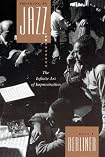
I have to admit that I am trying to find ways to improve what I create and do. I think hobby or otherwise, that is sort of human nature and all this has me thinking a bit about how things have changed and the processes that online musicians follow now.
In the past, the collaboration and jam sessions were the normal means of picking up tips, learning chord progressions, mimicing styles and adding them into your own repertoire. Musicians would jam after hours or in apartments just to pick up styles and to play off of each other. Learning in this way must have been a unique experience. The back and forth between players often formed great synergies that carried over into the studios.
I recently got to hear a local jazz combo play with Randy Brecker which was a bit of a humbling experience. I've been putting a number of jazz pieces together recently and this was a chance to hear live musicians interact (in this case after only a few days rehearsal!). Of course I realize there is a big gap in talent between my own hacked out pieces and life long performers but there was more than that. I think in live improvisational performance, you see players build on each solo and off of each other's playing styles. This is something you don't see in the online amateur musician - like myself.
I can put many tracks together - drums, saxes, trumpets etc, but every one is me playing or tweaking the sounds. You get my perspective on everything and aside from the skills gap, I think there is a creativity difference there. I can put some things together that I think are very listenable and occasionally pretty good but they are homogenous in a sense. It is presumptuous of me to attempt to put jazz charts together in the shadow of Miles Davis, Wayne Shorter or many others, but since its a hobby, hubris is OK and failing is without consequences beyond slightly wounded pride.
Collaboration in electronic music is often done virtually and disjointed. It is easy to collaborate anywhere in the world which is tremendous but you do lose that immediacy and the back and forth that goes on with performers. What impresses me most is the live improvs between jazz masters. My own process of getting a half decent track involves take after take, practice and finally recording. In live jazz, you see musicians following rapid 16 note patterns immediately with no rehearsal - pretty amazing!
So I am well aware that the process I use in music is different, probably inherently flawed and probably won't match the incredible efforts of skilled jazz combos. But I'm vain and stupid enough to keep trying!
Sunday, October 21, 2012
It don't mean a thing....
Its no secret to anyone who listens to my pieces that I've been on a bit of a jazz kick since getting my EWI wind controller. The EWI lets me use my breath to control any number of instruments which I find much easier than keyboarding since I used to play trumpet. Coupled with good software instruments, it sounds very authentic. My favorite software instrument for jazz is Wallander's Wivi Band. Wivi band provides about 14 software modeled instruments that sound extremely authentic. The one knock is that they sort of have an orchestral bias so for jazz, some of the sounds are a bit "clean". I find that with some equalization or subtle distortion in Logic 9, I can get what I want.
Another great set of sounds that I am investigating is samplemodeling. They provide more sample-based instruments (rather than software modeled), but are much more expensive. So far, the budget has been holding and I haven't sprung for them!
This interest in jazz has got me researching as well as playing. Lately I've been reading The Studio Recordings of the Miles Davis Quintet 1965-1968 by Keith Waters. It goes into great depth about the recording techniques, improvisational methods and modal jazz used in these recordings. The more I read the book, the more I realize that my music theory is rusty! I've gone back and have been reviewing jazz theory and chord progressions. Miles Davis is sort of like jumping into the deep end! The speed and techniques are beyond my playing skills - particularly with the EWI.
I have one piece I attempted in a phrygian mode with Noatikl where I composed a combo piece - the Miles quintet was the inspiration, but it doesn't reach that level:
Its a fun and fast-paced piece, but probably doesn't have the "live" or real feel to it.
Since Miles is a bit of a stretch still, I started reviewing more basic jazz progressions which brought me to Big Band jazz. In the late 1970s, early 80s, my high school years, I played trumpet in a community symphony, a pops orchestra and a high school jazz band. The jazz band played tons of big band numbers since our director was a big band freak.
I put some basic chord progressions together, changed to 6/8 time since 4/4 gets boring and started hearing more Bennie Goodman phrases. The piece started with the piano chord progressions and I added in the wind ensemble using ewiVoicing. As I've blogged before, this is a great library that will auto-harmonize your notes. With the EWI, this lets me set up 4 instruments, and play them all in diatonic chords at the same time. Basically, the wind ensemble - I used a trombone, tenor sax and 2 trumpet parts for the wind section.
The next step was playing some of the solos. Here I just noodled out a basic clarinet solo, tenor solo and muted trumpet solo. The great thing with the EWI instrument is that I can use the EVI fingering method (based on trumpet fingerings) for all of the instruments.
The last part was to pop in a piano solo - my usual cheap trick there. Record the chords in one track and the lead on another (I'm a lousy keyboardist!). The results are I think pretty good:
I'll probably keep experimenting as long as I am on the jazz kick. In between, I still pop out quite a bit of synth noise on the iPad and desktop. Another cool trick is to use the EWI with synthesizer lines - the breath control adds a new aspect to electronica as well. Sort of a "super" mod-wheel.
Another great set of sounds that I am investigating is samplemodeling. They provide more sample-based instruments (rather than software modeled), but are much more expensive. So far, the budget has been holding and I haven't sprung for them!
This interest in jazz has got me researching as well as playing. Lately I've been reading The Studio Recordings of the Miles Davis Quintet 1965-1968 by Keith Waters. It goes into great depth about the recording techniques, improvisational methods and modal jazz used in these recordings. The more I read the book, the more I realize that my music theory is rusty! I've gone back and have been reviewing jazz theory and chord progressions. Miles Davis is sort of like jumping into the deep end! The speed and techniques are beyond my playing skills - particularly with the EWI.
I have one piece I attempted in a phrygian mode with Noatikl where I composed a combo piece - the Miles quintet was the inspiration, but it doesn't reach that level:
Its a fun and fast-paced piece, but probably doesn't have the "live" or real feel to it.
Since Miles is a bit of a stretch still, I started reviewing more basic jazz progressions which brought me to Big Band jazz. In the late 1970s, early 80s, my high school years, I played trumpet in a community symphony, a pops orchestra and a high school jazz band. The jazz band played tons of big band numbers since our director was a big band freak.
I put some basic chord progressions together, changed to 6/8 time since 4/4 gets boring and started hearing more Bennie Goodman phrases. The piece started with the piano chord progressions and I added in the wind ensemble using ewiVoicing. As I've blogged before, this is a great library that will auto-harmonize your notes. With the EWI, this lets me set up 4 instruments, and play them all in diatonic chords at the same time. Basically, the wind ensemble - I used a trombone, tenor sax and 2 trumpet parts for the wind section.
The next step was playing some of the solos. Here I just noodled out a basic clarinet solo, tenor solo and muted trumpet solo. The great thing with the EWI instrument is that I can use the EVI fingering method (based on trumpet fingerings) for all of the instruments.
The last part was to pop in a piano solo - my usual cheap trick there. Record the chords in one track and the lead on another (I'm a lousy keyboardist!). The results are I think pretty good:
I'll probably keep experimenting as long as I am on the jazz kick. In between, I still pop out quite a bit of synth noise on the iPad and desktop. Another cool trick is to use the EWI with synthesizer lines - the breath control adds a new aspect to electronica as well. Sort of a "super" mod-wheel.
Saturday, October 13, 2012
Figuring it out
Recently, Propellerhead put out a new version of their Figure app on the iPad and with the new update finally provides audiocopy to the program. This makes it one of my favorite beat-making apps and provides a great starting point for many of my songs.
Figure uses the underlying sound engine from Propellerhead's famous Reason DAW but presents the interface in a touch manner fully suited to the iPhone/iPad. The app itself is an iPhone app but scales beautifully on the larger iPad screen.

Originally the Figure app would only play 2 bars of music and had no save or copy abilities. Now you have the option of recording 2,4 or 8 bar sequences and with Audiocopy, you can easily paste the resulting sounds into a DAW to create larger compositions.
The "wheels" in the app let you set up syncopated rhythms that cycle in the pattern and my lifting and lowering your fingers rhythmically, you can also syncopate the syncopations! This lets me put together some very funky rhythms very quickly.
My favorite technique is to record a few 8 bar licks, then copy the individual parts into Garageband or some other DAW to assemble into larger pieces. I add in additional synths and parts from there.
If you are making use of the "Pump" option, however, you should audiocopy the parts together and not in pieces since the "pump" causes a side-chaining effect to occur in the melody and basslines based on the bass drum.
With the ability to put together complex rhythms, the ability to tweak and bend the sounds with just your fingers, Propellerhead have taken full advantage of the touch interface of the iPad without just throwing a "virtual" keyboard in front of your face.
I think products like Figure, Animoog and iElectribe are where music making on the iPad should be going and I'll be making good use of them moving forward!
Here's a few recent pieces I did using Figure as a starting point - one was composed in Garageband and the other in Tabletop:
Figure uses the underlying sound engine from Propellerhead's famous Reason DAW but presents the interface in a touch manner fully suited to the iPhone/iPad. The app itself is an iPhone app but scales beautifully on the larger iPad screen.

Originally the Figure app would only play 2 bars of music and had no save or copy abilities. Now you have the option of recording 2,4 or 8 bar sequences and with Audiocopy, you can easily paste the resulting sounds into a DAW to create larger compositions.
The "wheels" in the app let you set up syncopated rhythms that cycle in the pattern and my lifting and lowering your fingers rhythmically, you can also syncopate the syncopations! This lets me put together some very funky rhythms very quickly.
My favorite technique is to record a few 8 bar licks, then copy the individual parts into Garageband or some other DAW to assemble into larger pieces. I add in additional synths and parts from there.
If you are making use of the "Pump" option, however, you should audiocopy the parts together and not in pieces since the "pump" causes a side-chaining effect to occur in the melody and basslines based on the bass drum.
With the ability to put together complex rhythms, the ability to tweak and bend the sounds with just your fingers, Propellerhead have taken full advantage of the touch interface of the iPad without just throwing a "virtual" keyboard in front of your face.
I think products like Figure, Animoog and iElectribe are where music making on the iPad should be going and I'll be making good use of them moving forward!
Here's a few recent pieces I did using Figure as a starting point - one was composed in Garageband and the other in Tabletop:
Subscribe to:
Posts (Atom)